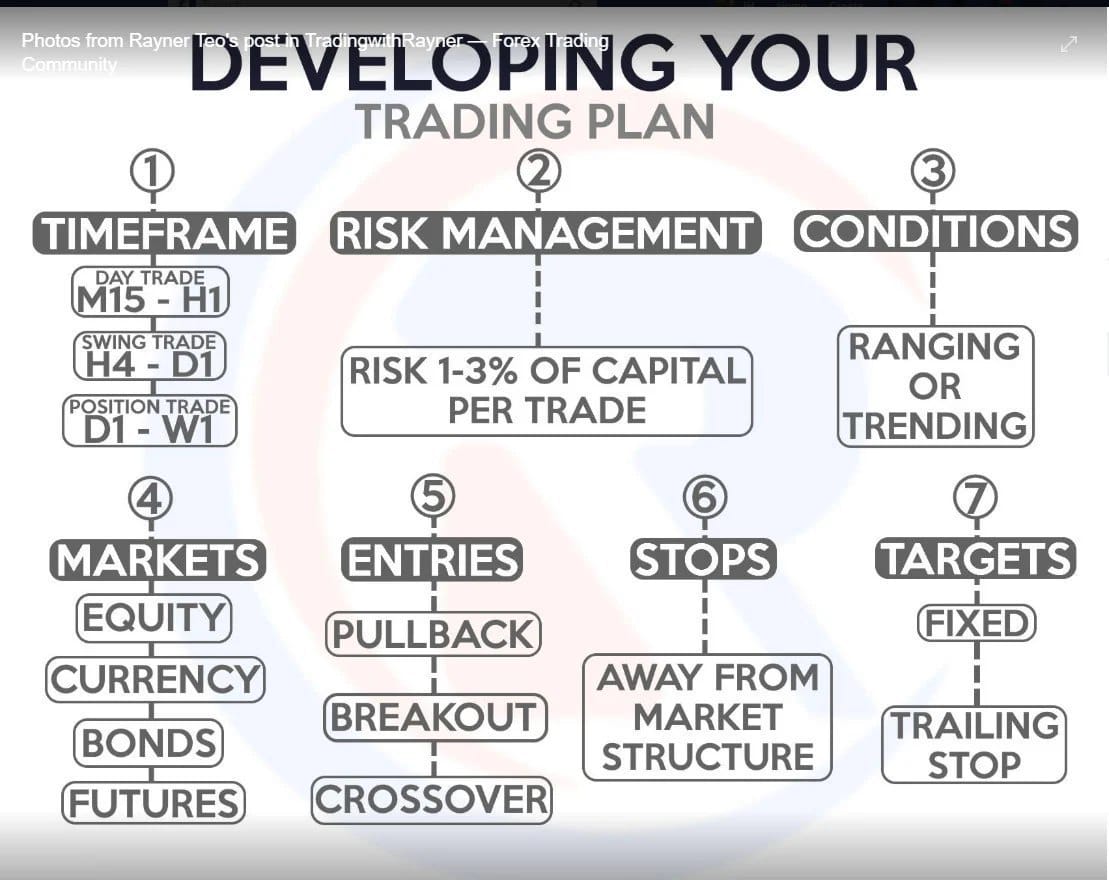
Trading Plan
Be your own trader.
In other words: Don’t follow someone else’s trading advice blindly!
Just because someone may be doing well with their method, it doesn’t mean it will work for you.
We’re all in different situations in life, and we all have different market views, thought processes, risk tolerance levels, and market experience.
Have your own personalized trading plan and update it as you learn from the market.
With rock-solid discipline, your trading could look like this.
Developing a Trading Plan and sticking to it are the two main ingredients of trading discipline.
A trading plan defines what is supposed to be done, why, when, and how. It covers your trader personality, personal expectations, risk management rules, and trading system(s).
When followed, a trading plan will help limit trading mistakes and minimize your losses.
After all, “If you fail to plan, then you’ve already planned to fail.”
A trading plan removes any bad decision-making in the heat of the moment.
The Difference Between a Trading Plan and a Trading System
Before we continue, we have to quickly distinguish the difference between a trading plan and a trading system.
A trading system describes how you will enter and exit trades.
A trading system is PART of your trading plan but is just one of several important parts, i.e., analysis, executions, risk management, etc.
Since market conditions are always changing, a good trader will usually have two or more trading systems in his or her trading plan.
Trading systems will be covered more in-depth later on in the lesson, but we thought that it was important to point out the difference between the two upfront to avoid any confusion.
A trading plan will make trading simpler than it would be if you traded without one.
Think of when you use a GPS device.
You enter where you want to go. It then figures out where you currently are and then shows you how to get to where you want to go.
You’re able to constantly check on your GPS to see if you’re still on the right track.
When you make a wrong turn, it knows to make adjustments, and it points you back in the right direction.
A trading plan is your trading GPS. It will show you where you currently are as a trader and help you get to your destination: consistent profitability.
Traveling without a GPS wouldn’t be a smart idea. You wouldn’t know how to get to your destination and it’s highly likely that you’ll drive around lost like a chicken with its head chopped off.
You’re probably thinking that one could use an ancient object called “maps” instead, but we have no clue what that is. Please don’t make such absurd suggestions again.
Trading without a trading plan would be the same thing as driving without a GPS–a bad idea.
You’re trying to get to this Promised Land called “Consistent Profits,” but since you have no way of knowing whether you’re headed in the right direction, you’ll most likely end up blowing out your account.
With a trading plan, you’re able to know if you’re headed in the right direction.
You’ll have a framework to measure your trading performance. And just like a GPS, you’re able to monitor this continually.
This allows you to trade with less emotion and stress.
Most importantly, if you suck at trading (and you certainly will in the beginning), you will know it is down to one of only two reasons: either there’s a problem in your trading plan or you are not sticking to your trading plan.
If you’re trading without a plan, it’s impossible to know what you’re doing right from wrong.
“If you fail to plan, then you’ve already planned to fail.”
Obviously, a trading plan doesn’t guarantee success, but a good plan that is followed will help you stay in the forex game longer than traders who don’t have a trading plan.
SURVIVAL is better than failure and it should be your first goal as a newbie trader.
Remember, 90% of new traders don’t make it. You want to be part of that special “10%” that does make it.
You’re probably thinking, “Ba humbug! Trading plan, shading plan. I can be part of that 10% without a stinkin’ trading plan!”
It may be tempting to trade by the seat of your pants, but if you don’t develop clearly defined trading plans and be disciplined enough to follow them consistently, you’ll have much difficulty making consistent money as a trader.
Don’t take any chances. Have a trading plan.