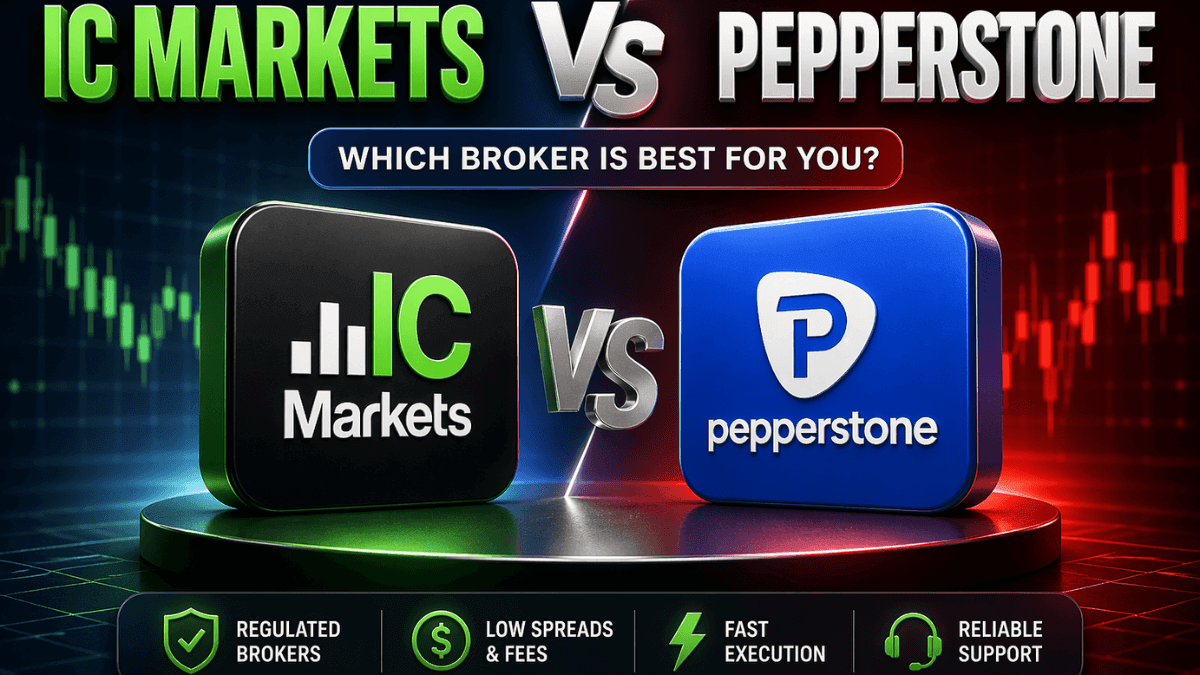
Choosing between IC Markets and Pepperstone can shape your entire trading experience. Both brokers are well-known for low spreads, fast execution, and strong platform support, but they differ in how they serve traders.
This guide breaks down the real differences in a practical, easy-to-understand way. By the end, you’ll know which broker fits your trading style, budget, and goals.

Overview of IC Markets and Pepperstone
Before diving into details, it helps to understand what each broker is known for. Both are global forex and CFD brokers with strong reputations, but they focus on slightly different strengths.
IC Markets Overview
IC Markets is widely recognized for offering ultra-low spreads and deep liquidity. It is especially popular among scalpers and algorithmic traders who rely on tight pricing and fast execution.
The broker connects traders to institutional-grade liquidity providers. This setup often results in raw spreads starting from 0.0 pips on major pairs.
Pepperstone Overview
Pepperstone is known for its balanced approach between low costs and user-friendly features. It appeals to both beginners and experienced traders who want reliability and flexibility.
The broker also focuses heavily on customer support and platform variety. It offers a smooth onboarding experience, which makes it attractive for newer traders.
Regulation and Trustworthiness
Trust is one of the most important factors when choosing a broker. Both IC Markets and Pepperstone operate under strong regulatory oversight. Check our guide on how to check if a forex broker is regulated and licensed.
IC Markets Regulation
IC Markets is regulated by multiple authorities, including:
- ASIC (Australia)
- CySEC (Europe)
- FSA (Seychelles)
These regulators enforce strict rules on client fund protection and operational transparency. This makes IC Markets a trustworthy option for global traders.
Pepperstone Regulation
Pepperstone also holds licenses from top-tier regulators, including:
- ASIC (Australia)
- FCA (UK)
- CySEC (Europe)
The presence of the FCA adds an extra layer of credibility. This makes Pepperstone slightly stronger in terms of regulatory reputation.
Trading Costs: Spreads, Commissions, and Fees
Cost is where many traders make their final decision. Both brokers offer competitive pricing, but their structures differ slightly.
IC Markets Pricing
IC Markets is known for extremely tight spreads, especially on its Raw Spread account.
- Spreads: From 0.0 pips
- Commission: Around $7 per lot (round turn)
- No inactivity fees
This setup is ideal for high-frequency traders. Lower spreads can make a big difference over many trades.
Pepperstone Pricing
Pepperstone also offers low spreads, but slightly higher than IC Markets in some cases.
- Spreads: From 0.0 pips (Razor account)
- Commission: Around $7 per lot (round turn)
- No inactivity fees
For most traders, the difference is small. However, scalpers may still prefer IC Markets for the lowest possible spreads.
Trading Platforms and Tools
The platform you use affects how you analyze and execute trades. Both brokers offer industry-standard platforms with strong performance.
IC Markets Platforms
IC Markets supports:
- MetaTrader 4 (MT4)
- MetaTrader 5 (MT5)
- cTrader
cTrader is especially popular for advanced charting and fast execution. It also works well for algorithmic trading.
Pepperstone Platforms
Pepperstone offers:
- MetaTrader 4 (MT4)
- MetaTrader 5 (MT5)
- cTrader
- TradingView integration
The addition of TradingView gives Pepperstone an edge. Many traders prefer its modern interface and powerful charting tools.
Execution Speed and Liquidity
Execution speed can directly affect your profits, especially in volatile markets. Both brokers perform well, but there are slight differences.
IC Markets Execution
IC Markets is built for speed and precision. It uses low-latency servers and connects directly to liquidity providers.
This makes it a top choice for scalping and automated trading strategies. Slippage is generally minimal under normal conditions.
Pepperstone Execution
Pepperstone also delivers fast execution with minimal delays. It focuses on stable performance across different market conditions.
While slightly less aggressive than IC Markets, it still performs reliably for most trading styles.
Account Types and Minimum Deposit
Account flexibility matters, especially if you’re just starting. Both brokers offer multiple account options to suit different needs.
IC Markets Accounts
IC Markets offers:
- Standard Account (no commission, wider spreads)
- Raw Spread Account (low spreads + commission)
Minimum deposit is typically $200. This is reasonable for most retail traders.
Pepperstone Accounts
Pepperstone provides:
- Standard Account
- Razor Account (similar to Raw Spread)
Minimum deposit is also around $200. The structure is simple and beginner-friendly.
Assets and Market Range
The number of tradable assets determines how much you can diversify your portfolio. Both brokers cover a wide range of markets.
IC Markets Assets
IC Markets offers:
- Forex pairs
- Indices
- Commodities
- Cryptocurrencies
- Stocks (CFDs)
The selection is broad and suitable for multi-asset traders.
Pepperstone Assets
Pepperstone provides:
- Forex
- Indices
- Commodities
- Cryptocurrencies
- Shares (CFDs)
The range is similar, though Pepperstone sometimes offers more stock CFDs depending on the region.
Customer Support and User Experience
Support quality can make a big difference, especially when issues arise. Both brokers invest in customer service, but their approach varies.
IC Markets Support
IC Markets offers 24/7 support via live chat, email, and phone. Response times are generally fast and helpful.
The platform is slightly more technical, which may require some learning for beginners.
Pepperstone Support
Pepperstone is known for excellent customer service. It provides quick responses and clear guidance, especially for new traders.
The user interface is also more intuitive, making it easier to get started.
Pros and Cons
A quick summary can help you compare both brokers at a glance.
IC Markets Pros
- Extremely low spreads
- Ideal for scalping and algo trading
- Strong execution speed
IC Markets Cons
- Slightly more complex for beginners
- Fewer beginner-focused tools
Pepperstone Pros
- User-friendly interface
- Strong regulation (including FCA)
- TradingView integration
Pepperstone Cons
- Slightly higher spreads in some cases
- Not as specialized for scalping
Final Verdict
Choosing between IC Markets and Pepperstone depends on how you trade. There is no one-size-fits-all answer, but the differences are clear when you look closely.
IC Markets is the better choice if you focus on scalping, automation, or ultra-low spreads. Its infrastructure is designed for speed and cost efficiency.
Pepperstone is the better option if you want a balanced experience with strong support and modern tools. It works well for beginners and traders who value simplicity.
In the end, both brokers are reliable and competitive. The right choice comes down to your trading style, not just the features on paper.
FAQs About IC Markets vs Pepperstone
IC Markets vs Pepperstone for beginners depends on how comfortable you are with trading platforms. Pepperstone is generally easier to use, with a cleaner interface and better onboarding support. IC Markets is still beginner-friendly, but its tools and setup are more suited to traders who already understand the basics.
IC Markets vs Pepperstone on spreads shows a small but important difference. IC Markets often offers slightly lower raw spreads, especially on major forex pairs. Pepperstone remains competitive, but IC Markets usually has the edge for traders focused on minimizing trading costs.
IC Markets vs Pepperstone for scalping clearly favors IC Markets. Its ultra-low spreads, deep liquidity, and fast execution make it ideal for high-frequency strategies. Pepperstone can still handle scalping, but it is not as specialized for this style.
IC Markets vs Pepperstone in terms of safety shows that both brokers are well-regulated and trustworthy. They are licensed by top-tier authorities like ASIC and CySEC, while Pepperstone also holds FCA regulation. This means both brokers follow strict rules to protect client funds.
IC Markets and Pepperstone platforms are very similar, as both offer MT4, MT5, and cTrader. Pepperstone stands out slightly because it also integrates with TradingView. This gives traders more flexibility and access to advanced charting tools.
IC Markets ‘ and Pepperstone’s minimum deposit is nearly the same for both brokers. Each typically requires around $200 to open a live account. This makes them accessible to most retail traders without a large upfront investment.
Trade Anytime, Anywhere with XM
Take your trading to the next level with a globally trusted forex and CFD broker. Enjoy competitive spreads, fast execution, and reliable customer support while trading securely.
With XM, you get access to powerful trading platforms, real-time charts, flexible account types, and advanced tools to help you analyze the markets and manage your trades efficiently. Start your journey today by opening a trading account for free and join millions of traders worldwide.
✅ Open an Account with XM
Our Editorial Desk – Focuses on forex trading, gold (XAU/USD), and commodities that move the markets. Our editorial desk blends human insight with AI-powered research to produce sharp, actionable content. We aim to help traders make informed decisions with unbiased market coverage.