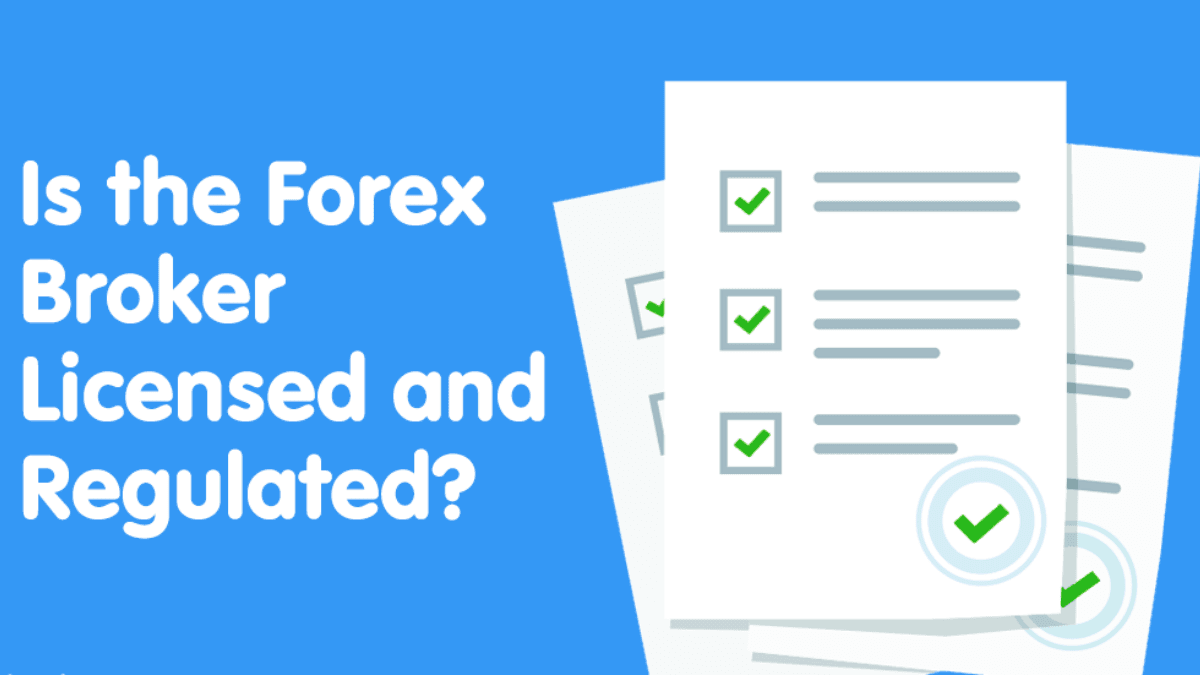
Choosing a forex broker is one of the most important decisions a trader will make. Before you deposit a single dollar, you need to know whether the company handling your money is operating legally and under proper supervision. Understanding how to check if a forex broker is licensed and regulated can help you avoid scams, protect your funds, and trade with greater confidence.
Many traders focus on spreads, leverage, and trading platforms while overlooking regulation. That can be a costly mistake. A broker may offer attractive bonuses and impressive marketing, but if it lacks proper authorization, your money could be at significant risk.

This guide walks you through the exact steps experienced traders use to verify a broker’s legitimacy, understand regulatory licenses, and identify warning signs before opening an account.
Why Forex Broker Regulation Matters
Regulation serves as a safety framework that helps ensure brokers operate fairly and transparently. It is designed to protect traders from fraud, unethical practices, and financial misconduct.
When a broker is regulated, it must comply with rules established by a recognized financial authority. These rules often cover client fund protection, reporting requirements, capital adequacy, dispute resolution procedures, and operational transparency.
Imagine two brokers offering identical trading conditions. One is licensed by a respected regulator and undergoes regular audits. The other has no regulatory oversight whatsoever. If something goes wrong, the regulated broker is far more likely to be held accountable.
Regulation cannot eliminate every risk associated with trading, but it significantly reduces the risk of dealing with dishonest firms.
Understanding Forex Broker Licenses
Before checking a broker’s credentials, it’s important to understand what a license actually represents.
A forex broker license is an authorization granted by a financial regulator allowing the company to provide trading services within specific jurisdictions. To obtain and maintain this authorization, brokers must satisfy strict requirements.
These requirements often include:
- Maintaining minimum capital reserves
- Segregating client funds from company funds
- Submitting financial reports
- Implementing anti-money laundering procedures
- Following consumer protection rules
- Undergoing periodic audits
The exact requirements vary depending on the regulator, but the overall goal remains the same: protecting investors and maintaining market integrity.
Step 1: Find the Broker’s Regulatory Information
The first step is locating the broker’s claimed regulatory details.
Legitimate brokers typically display their regulatory information prominently on their website. You can usually find it in the website footer, the “About Us” section, or legal documentation pages.
Look for information such as:
- Regulator name
- License number
- Registered company name
- Registered office address
- Jurisdiction of regulation
Be cautious if regulatory information is difficult to find. Reputable brokers generally make these details easy to access because regulation is a major trust factor.
If a broker only states that it is “regulated” without naming a regulator or providing a license number, treat that as a warning sign.
Step 2: Verify the License Directly with the Regulator
Finding a license number is only the beginning. The most important step is verifying it independently.
Scam brokers sometimes copy license numbers from legitimate companies or create fake regulatory claims. That’s why experienced traders never rely solely on information displayed on the broker’s website.
Visit the official website of the relevant regulator and search its public register.
Check whether:
- The license number exists
- The company name matches exactly
- The website domain matches the regulator’s records
- The license status is active
- The broker is authorized to offer forex trading services
Pay close attention to small differences in company names. Fraudulent firms sometimes imitate legitimate businesses by changing a single word or letter.
Step 3: Confirm the Company Name Matches
Many traders overlook this step, but it is one of the most effective fraud prevention measures.
A broker’s trading brand and legal company name are not always identical. For example, a broker may operate under a marketing brand while being legally owned by another company.
When checking regulatory records, verify that:
- The legal entity listed by the regulator owns the broker
- The registered address matches
- The website listed in the regulator’s database matches the broker’s website
If these details don’t align, investigate further before depositing funds.
A mismatch does not automatically indicate fraud, but it should prompt additional scrutiny.
Step 4: Check Which Regulator Issued the License
Not all regulatory licenses provide the same level of protection.
Some regulators are known for strict oversight and strong investor safeguards. Others have relatively light requirements and limited enforcement powers.
Tier-1 Regulators
Tier-1 regulators are generally considered the most trusted in the industry. Brokers regulated by these authorities typically face rigorous compliance requirements.
Examples include:
- Financial Conduct Authority (FCA)
- Australian Securities and Investments Commission (ASIC)
- Commodity Futures Trading Commission (CFTC)
- Monetary Authority of Singapore (MAS)
Tier-2 Regulators
These regulators generally maintain respectable standards but may have slightly different requirements or investor protection mechanisms.
Examples include:
- Cyprus Securities and Exchange Commission (CySEC)
- Financial Sector Conduct Authority (FSCA)
- Capital Markets Authority (CMA)
Offshore Regulators
Some brokers operate under offshore jurisdictions that offer limited oversight.
An offshore license is not automatically a sign of wrongdoing. However, traders should understand that regulatory protections may be weaker and dispute resolution options more limited.
Step 5: Review Regulatory Warnings and Enforcement Actions
A valid license does not necessarily mean a broker has a spotless history.
Many regulators publish enforcement actions, disciplinary measures, fines, and warning notices. Reviewing these records can provide valuable insight into a broker’s compliance culture.
Look for patterns such as:
- Repeated regulatory violations
- Misleading marketing practices
- Client fund issues
- Failure to meet reporting obligations
- Suspended or revoked licenses
A single historical issue may not be disqualifying, especially if it was resolved. Multiple serious violations deserve closer examination.
Step 6: Verify Client Fund Protection Measures
Strong regulation often requires brokers to implement specific safeguards for client money.
One of the most important protections is segregated accounts. This means client funds are kept separate from the broker’s operating funds.
Ask whether the broker provides:
- Segregated client accounts
- Negative balance protection
- Investor compensation schemes, where applicable
- Independent audits
- Risk management controls
These protections can make a substantial difference during periods of financial stress or market volatility.
Step 7: Evaluate the Broker’s Transparency
Regulated brokers tend to be transparent about their operations.
A trustworthy broker should clearly disclose:
- Trading costs
- Withdrawal policies
- Risk warnings
- Terms and conditions
- Corporate ownership structure
If key information is hidden, vague, or difficult to understand, proceed carefully.
Transparency often reflects the overall quality and professionalism of the company.
Common Red Flags That Suggest a Broker May Not Be Legitimate
Recognizing warning signs can help you avoid fraudulent operators before any money changes hands.
Be cautious if a broker:
- Guarantees profits
- Promises risk-free trading
- Pressures you to deposit immediately
- Refuses withdrawal requests
- Lacks verifiable regulatory information
- Uses aggressive sales tactics
- Frequently changes website domains
- Provides unrealistic bonus offers
Legitimate brokers understand that forex trading involves risk. Any company claiming guaranteed returns should immediately raise concerns.
How Scammers Fake Regulation
Fraudulent brokers have become increasingly sophisticated. Understanding their tactics can help you stay ahead.
Some common methods include copying genuine license numbers, creating fake certificates, using cloned websites, or falsely claiming relationships with respected regulators.
Others may display regulator logos without authorization. Seeing a logo on a website means very little unless the license can be independently verified through the regulator’s database.
This is why direct verification remains the gold standard.
Questions to Ask Before Opening a Forex Trading Account
A few simple questions can reveal a great deal about a broker’s credibility.
Ask the broker:
- Which regulator supervises your operations?
- What is your license number?
- Are client funds segregated?
- What investor protections are available?
- What legal entity will hold my account?
- How are withdrawals processed?
A reputable broker should answer these questions clearly and confidently.
Hesitation, vague explanations, or evasive responses should not be ignored.
What to Do If You Suspect a Broker Is Unregulated
If you discover that a broker lacks proper authorization, avoid depositing funds until you have completed additional research.
If you have already deposited money and become concerned, document all communications and account records immediately. Contact the relevant financial regulator and seek guidance regarding available reporting channels.
The sooner concerns are addressed, the greater the likelihood of protecting your interests.
Final Thoughts
Learning how to check if a forex broker is licensed and regulated is one of the most valuable skills any trader can develop. Regulation is not merely a box to tick during broker selection—it is a critical layer of protection that helps safeguard your capital.
The process is straightforward: locate the broker’s regulatory information, verify it directly with the regulator, confirm company details, evaluate the quality of the regulator, and review the broker’s history and transparency. Taking these extra steps requires only a small amount of time, yet it can prevent significant financial losses.
In forex trading, protecting your capital begins long before your first trade. It starts with choosing a broker that has earned the right to handle your money through proper licensing, regulation, and accountability.
Trade Anytime, Anywhere with XM
Take your trading to the next level with a globally trusted forex and CFD broker. Enjoy competitive spreads, fast execution, and reliable customer support while trading securely.
With XM, you get access to powerful trading platforms, real-time charts, flexible account types, and advanced tools to help you analyze the markets and manage your trades efficiently. Start your journey today by opening a trading account for free and join millions of traders worldwide.
✅ Open an Account with XM
Our Editorial Desk – Focuses on forex trading, gold (XAU/USD), and commodities that move the markets. Our editorial desk blends human insight with AI-powered research to produce sharp, actionable content. We aim to help traders make informed decisions with unbiased market coverage.